Loading...
Serving Pacific Grove, CA and surrounding areas. (831) 340-7324
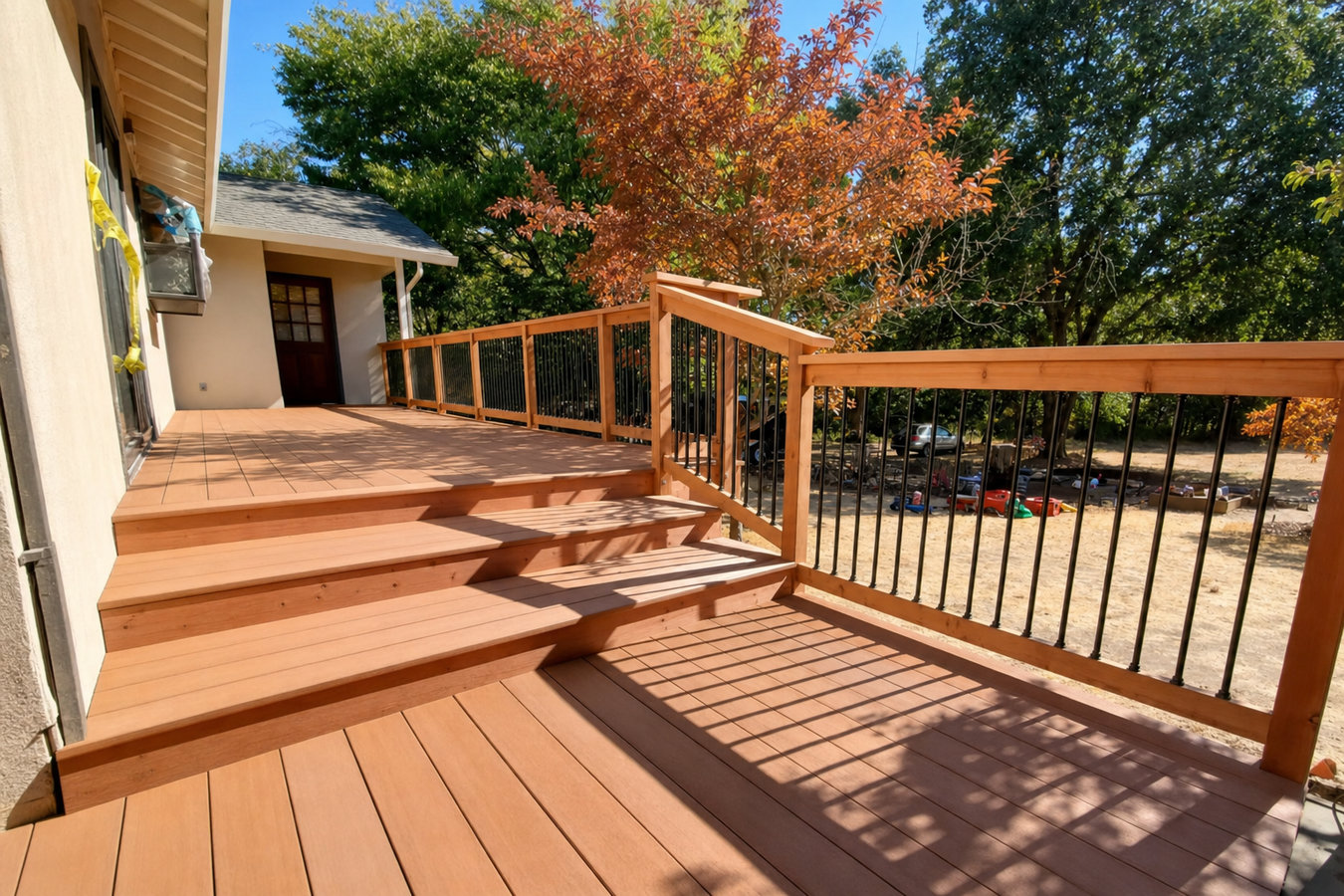
A railing that wobbles, rusts, or fails inspection is not just an eyesore - it is a liability. We install deck railings in Pacific Grove with coastal-rated materials, proper post anchoring, and a passed city inspection on every job.
Deck railing installation in Pacific Grove means anchoring structural posts through the decking into the framing below, installing the top rail and balusters or infill panels, pulling the required permit with the city, and scheduling a final inspection - most standard replacements are completed in one to two days of physical work, with one to three additional weeks for the permit process.
A lot of homeowners think of a railing as the last detail - something you bolt on at the end. In reality, the posts are structural elements anchored deep into the deck frame, and how they are attached determines whether the railing is genuinely safe or just cosmetically functional. In Pacific Grove, the salt air and moisture off Monterey Bay make material choice an equally important decision. Hardware that lasts decades in an inland climate can rust out in two or three years here if it was not specified for coastal exposure. The right contractor asks the right questions about your specific deck before recommending any material.
Homeowners planning a new deck who want railing integrated into the design from the start should look at our multi-level deck work - railing on every elevated section is part of every multi-level project we build, permitted and inspected as a single job.
Stand at the railing and push outward firmly with both hands. A safe railing should feel completely solid - no rocking, no flex at the base of the posts. Any movement at all is a warning sign that the posts may not be anchored properly, and it is worth having a contractor assess it before someone leans against it at the wrong moment.
In Pacific Grove's coastal climate, salt fog works into any crack in a paint or stain finish and starts breaking down the wood beneath. If you can see bare gray wood, soft spots when you press with a finger, or paint lifting in sheets, the railing has likely been absorbing moisture for some time. Surface repainting will not fix structural damage - affected sections may need to be replaced entirely.
If you have an elevated deck without a railing - or with only a partial one - you may already be out of compliance with California's building requirements, and more importantly, you have a genuine fall hazard. This is especially worth checking if you bought an older Pacific Grove home where the deck was added or modified by a previous owner without permits.
Look at the base of each post where it meets the deck. If you can see a gap, if the post is visibly tilting, or if the screws or bolts look corroded and loose, the connection has likely been compromised by moisture over time. This is a common finding on older Pacific Grove decks where the original hardware was not rated for coastal conditions.
We start every railing job with an on-site assessment - measuring the deck perimeter, checking the condition of the existing framing, and confirming the deck structure is solid enough to properly anchor new posts. If the framing needs reinforcement before the railing can go in, we tell you upfront and include it in the written estimate. We then pull the required permit with the City of Pacific Grove, remove the existing railing if there is one, anchor the new posts through the decking into the frame, and install the top rail, balusters or infill, and any cap rail or trim. Every new deck build we complete includes the railing system as part of the same permitted project, so nothing is added as an afterthought.
Material selection is central to the estimate conversation. We discuss each option - painted wood, composite, powder-coated aluminum, stainless steel cable, and glass panels - in terms of how each performs in Pacific Grove's specific coastal conditions, what maintenance each requires over the long term, and what each costs. For homeowners concerned about preserving views, we explain how cable and glass options compare to traditional baluster systems. The American Wood Council's residential deck construction guide is a useful reference for understanding how railing connections should be engineered - see awc.org for more detail on connection standards.
Best for homeowners with an aging or failing railing. We remove the old system, assess the framing, and install a new railing that meets current code requirements and is built for coastal conditions.
Best for homeowners with an elevated deck that was built without a railing - or with one that was removed. We add a properly anchored, permitted railing system and close out the permit with a passed city inspection.
Best for homeowners in Pacific Grove who want to keep sightlines open. Stainless steel cable systems resist coastal corrosion and require minimal maintenance while keeping the view largely unobstructed from a seated position.
Best for homeowners starting a new deck project. When railing is designed alongside the deck frame, the post layout and structural connections are optimized from the start - not retrofitted after the fact.
Pacific Grove sits directly on Monterey Bay, and the salt-laden fog that rolls in off the water is genuinely hard on outdoor materials. A painted wood railing installed with standard hardware in an inland city might look fine for ten years. The same railing installed in Pacific Grove with the wrong fasteners can start showing rust streaks within two or three years as the salt air attacks any uncoated metal it can find. This is not a hypothetical - it is a pattern we see regularly when homeowners call us about railings that were installed by contractors without experience in coastal conditions. The fix is straightforward: specify marine-rated or stainless steel hardware from the beginning and choose a finish system designed for high-humidity, salt-air exposure.
Pacific Grove also has a large number of Victorian-era and early Craftsman homes, many of which have decks that were added or modified over the decades without being built to current standards. Homeowners in Monterey and Seaside face the same situation with older housing stock. Before any railing work begins, we assess the condition of the deck framing underneath - because anchoring new posts into rotted or undersized framing creates a railing that looks correct but is not structurally sound. Catching that problem during the estimate visit is far less expensive than discovering it after installation day.
We respond to new inquiries within one business day. After a brief phone conversation, we schedule a time to see your deck in person - because an accurate estimate is not possible without looking at the structure, the height off the ground, and the condition of the framing underneath. We also ask whether your property falls under any HOA design review requirements.
During the visit we measure the deck perimeter, check the framing, and assess how the deck attaches to the house. Within a few days you receive a written estimate that breaks down materials and labor by line item. If the framing needs work before the railing can go in, that is included in the estimate - no surprises after the crew arrives.
For most railing installations in Pacific Grove that involve structural posts, we pull a building permit from the city's Community Development Department before work begins. This typically adds one to two weeks to the start of the project. We handle this on your behalf - you do not need to navigate the permit office yourself.
The crew removes the old railing if there is one, anchors the new posts into the deck framing, and installs the top rail, balusters or infill, and any hardware. Most standard replacements are done in one day. After installation, we schedule the city's final inspection. Once that passes, we walk you through the finished railing and cover any material-specific maintenance steps.
We assess the framing, pull the permit, and give you a written estimate before any work is scheduled - no obligation until you decide to move forward.
(831) 340-7324We specify marine-grade or stainless steel fasteners and connectors as standard practice on every railing installation in Pacific Grove - not as an add-on. Salt air corrodes standard hardware faster than most homeowners expect. Using the right fasteners from day one is the difference between a railing that stays solid for years and one that starts showing rust and loosening posts within a single wet season.
Many older Pacific Grove homes have deck framing that was not built to support a modern railing system. We assess the existing structure during the estimate visit and tell you upfront if reinforcement is needed - so installation day does not turn into a discovery process. This is the kind of detail a contractor without local experience in older housing stock is likely to miss.
We pull the permit, manage the plan review, and schedule the city's final inspection. A passed inspection means the finished railing is officially on record as code-compliant. That documentation protects you during a home sale - unpermitted railing work is one of the issues that Pacific Grove home inspectors routinely flag, and it can complicate or delay a closing. You can verify our contractor license at cslb.ca.gov.
A lot of Pacific Grove homeowners hesitate on railing replacement because they are worried about losing sightlines. Cable railing systems use thin stainless steel wires between posts, keeping views largely open while meeting the same safety and code requirements as a traditional baluster railing. We install cable systems as part of our standard railing work, so you are not limited to a single style.
The North American Deck and Railing Association sets the professional standards for this kind of work - including guidelines on post anchoring, hardware selection, and inspection readiness. See more at nadra.org. Every railing we install in Pacific Grove is built to those standards and confirmed by a city inspection - so you can lean on it and not think twice.
Planning a full new deck? We design and build complete deck platforms with the railing system integrated from the start, so structure and style work together from day one.
Learn MoreMulti-level decks on sloped lots require railing on every elevated section - we handle both the deck construction and the railing installation as a single permitted project.
Learn MoreOur calendar fills quickly in fall - the best window for finishing work before winter fog sets in - contact us now to get your project on the schedule.