
Loading...
Serving Pacific Grove, CA and surrounding areas. (831) 340-7324
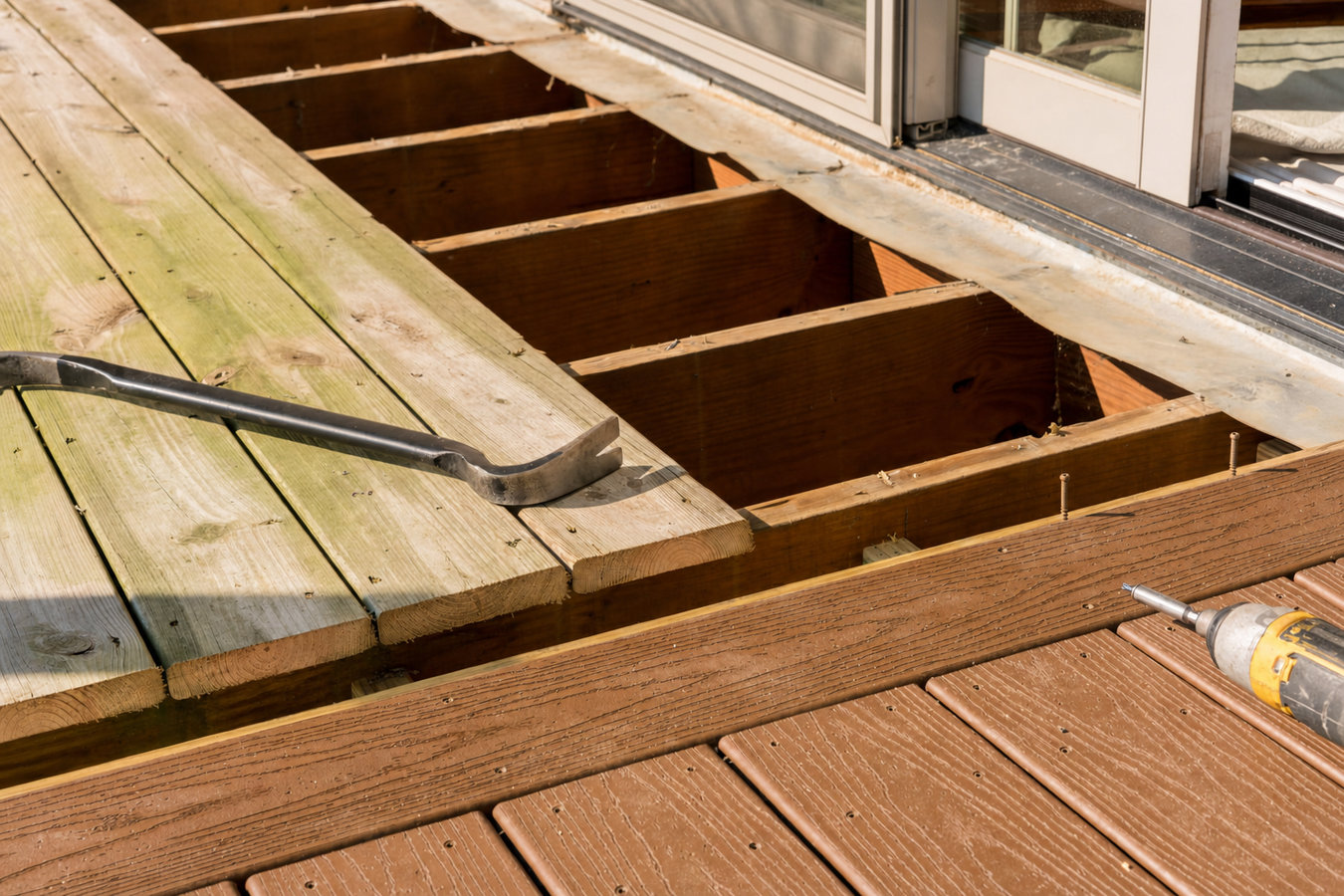
Pacific Grove Fence & Deck is a deck builder serving Marina, CA - offering composite deck installation, deck repair, wood decks, and fencing for homes throughout the city. We have served Monterey County homeowners since 2019 and respond to new inquiries within one business day.
Marina sits directly on Monterey Bay, and the salt air and morning fog that roll through every neighborhood here take a hard toll on untreated wood - corroding hardware, stripping sealant, and promoting rot in framing that stays damp through summer. Composite decking handles those conditions far better, resisting moisture, fading, and corrosion through years of coastal exposure. See how our composite deck installation service is built for the demands of Monterey Bay homes.
Most of Marina's housing stock was built during the Fort Ord years - the 1940s through the 1970s - and many of those homes have original decks or patios that have been exposed to decades of salt air and fog without adequate maintenance. Hidden corrosion at ledger board connections and post bases is common in Fort Ord-era homes, and it often goes undetected until a structural inspection happens. We assess the full framing, not just the surface, and give you a straight answer on repair versus replacement.
Pressure-treated wood is still a workable option for Marina homeowners on a tighter budget, but the coastal environment here demands more care than an inland installation. We use ground-contact rated PT lumber for all posts and framing members close to grade, select marine-grade hardware throughout, and recommend a penetrating sealer applied in the first season before salt air begins working on exposed grain. A properly built and maintained PT deck can hold up well even this close to the bay.
Marina's lots are compact - typical residential properties here are 5,000 to 7,000 square feet with neighbors close on all sides - and the strong afternoon winds off the bay put constant lateral stress on fence panels. Vinyl fencing is one of the better choices in this environment because it does not rust, does not need painting, and flexes slightly under wind load rather than cracking the way older wood panels do. It is a practical, low-maintenance option for a city where outdoor structures take more abuse from weather than most places.
Wood fencing suits the look of many of Marina's older neighborhoods, and it remains the right choice for homeowners who want the natural character that vinyl cannot replicate. In Marina's coastal climate, we treat every wood fence as an outdoor installation in a high-exposure environment - selecting cedar or redwood over standard pine, setting posts in concrete with proper drainage at the base, and applying a penetrating sealant before the first full season of salt air exposure begins.
Marina's afternoon winds and persistent morning fog mean outdoor spaces without overhead cover can go unused for much of the year. A patio cover or covered deck changes that - it shields furniture and flooring from direct moisture and gives you a space you can actually sit in on a foggy morning without getting damp. For mid-century Marina homes with limited backyard square footage, a well-designed cover can make a small outdoor area feel significantly more usable year-round.
The majority of Marina's homes were built during the Fort Ord era - from the 1940s through the 1970s - to house Army families stationed at the base. These are stucco-clad, mid-century ranch-style homes with modest footprints and small yards, and many have gone through decades of tenant turnover since the base closed in 1994 without the consistent upkeep that owner-occupied homes typically receive. The coastal setting makes the maintenance gap worse: salt air corrodes hardware and strips wood sealant faster than in inland cities, and the strong afternoon winds off Monterey Bay put constant physical stress on fencing, railings, and deck framing. A deck that was installed in the 1970s and never properly treated for a coastal environment may look acceptable on the surface while the framing underneath has been quietly deteriorating for years.
Marina's sandy coastal soils add another variable that inland contractors often underestimate. The city sits on coastal dune terrain, and sandy soil compacts and shifts more than the heavy clay found in the Salinas Valley or the inland hills. Over time, that movement can put lateral stress on deck posts and shift concrete patios or walkways unevenly - a problem that shows up as wobbling posts or cracked slabs rather than obvious structural failure. Newer homes built on the former Fort Ord grounds since the 1990s are in better shape structurally, but they are now reaching an age where first-generation roofing, decking, and fencing need serious attention. Marina's permit process runs through the City of Marina's Community Development Department, and local inspectors check compliance with California residential code for deck ledger connections, railing heights, and footing depth on coastal soils.
Our crew works throughout Marina regularly, and we understand the local conditions that affect deck builder work here. Marina is a compact city - about 7.5 square miles - where the older Fort Ord-era neighborhoods and the newer developments near California State University Monterey Bay sit just blocks apart. The difference between a mid-century stucco ranch and a 2000s-era tract home matters when we are planning a deck build - older homes often have non-standard framing layouts and may not have blocking in place for a ledger attachment, while newer homes are more straightforward structurally.
Most Marina residents navigate by a few clear reference points: Marina State Beach runs along the western edge of the city and is the neighborhood landmark that puts the coastal exposure in immediate context. The Fort Ord National Monument covers thousands of acres to the east and is a familiar boundary for anyone who has lived here. Reservation Road and Del Monte Boulevard are the main corridors most locals use to orient themselves, and we know both well - along with the access challenges that come with working on properties near the dune terrain along the western edge of the city.
We also serve homeowners in neighboring Castroville to the north, where the agricultural setting and different soil conditions change the material and anchoring considerations for outdoor structures. Homeowners closer to the coast in Seaside face nearly identical salt-air exposure to Marina, and we handle work across both cities with the same coastal-grade approach.
Reach us by phone or through the estimate form on this site. We respond to all new inquiries within one business day and work to schedule site visits within a week of first contact, depending on current project load.
We visit your Marina property, assess the site conditions - including soil type near the dunes, existing framing condition if it is a repair job, and access for materials - and provide a written estimate. No cost is committed until you approve the estimate, and we walk you through permit requirements at that meeting.
We submit the permit application to the City of Marina and handle the plan review process. Once the permit is approved - typically two to four weeks - our crew starts construction. You do not need to be home for all phases, but we coordinate access with you directly.
After construction is complete, the City of Marina conducts a final inspection to close the permit. We walk through the finished project with you to confirm everything meets what was agreed, and we address any punch-list items before considering the job done.
We serve Marina homeowners with coastal-grade deck and fence work. Call us or submit your project details and we will get back to you within one business day.
(831) 340-7324Marina is a city of about 22,000 people on the northern edge of Monterey Bay, sitting between Seaside to the south and Castroville to the north. The city grew up almost entirely around Fort Ord, the U.S. Army base that operated from 1917 until it closed in 1994. The bulk of the residential neighborhoods - compact streets of single-story stucco ranch homes - were built to house military families during that era. Since the base closure, Marina has transitioned to a civilian community, and California State University Monterey Bay opened on the former Fort Ord grounds in 1994, bringing new institutional life and some newer construction to the eastern part of the city. The contrast between the older military-era neighborhoods near downtown and the newer residential development near campus is something any contractor working here encounters regularly. For more on the city, see the Marina, California Wikipedia article.
Marina State Beach runs along the western edge of the city, known for its tall sand dunes and strong ocean winds that make it a destination for hang gliding and kite flying. That same wind and coastal exposure defines what it means to maintain a home in Marina - exterior surfaces take more abuse here than in most inland cities of comparable size. The Fort Ord National Monument covers thousands of acres to the east, and the mix of protected land and newer residential development gives Marina an unusual layout that long-time residents know well. Homeowners across this stretch of the Monterey coast, from Marina through neighboring Seaside, face similar building conditions and we serve both cities regularly.
Low-maintenance composite decking that looks great for decades.
Learn MoreAffordable pressure-treated wood decks built to last outdoors.
Learn MoreNaturally beautiful cedar decks crafted for your outdoor space.
Learn MoreProtect and refresh your deck with professional staining and sealing.
Learn MoreCustom wood and privacy fences for security and curb appeal.
Learn MoreEnjoy the outdoors bug-free with screened porches and decks.
Learn MoreCall us today or submit your project details online - we respond within one business day and serve all of Marina with coastal-grade deck and fence work.