
Loading...
Serving Pacific Grove, CA and surrounding areas. (831) 340-7324
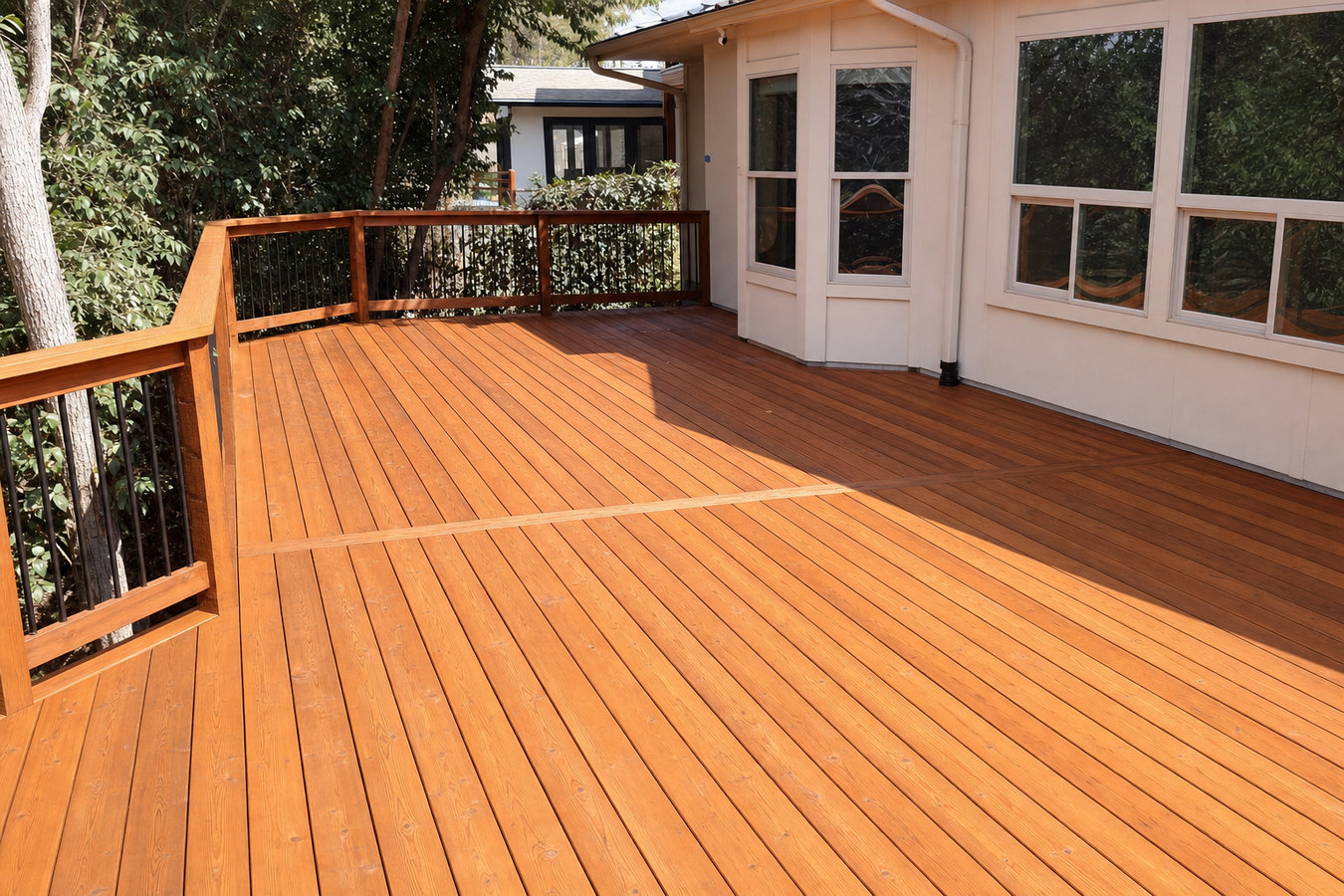
Pacific Grove Fence & Deck is a deck builder serving Carmel Valley Village, CA - building cedar decks, custom outdoor structures, pergolas, and wood fencing for homes throughout the valley. We have served Monterey County homeowners since 2019 and respond to all inquiries within one business day.
Carmel Valley Village gets summer highs in the 90s and a wet-dry cycle that tests every outdoor material - cedar handles that cycle better than most, resisting the warping and splitting that pressure-treated pine develops after a few inland summers. The natural oils in cedar also slow decay without requiring heavy chemical treatment, which matters on properties near the valley's oak woodlands. Learn how our cedar wood deck construction service is designed for the conditions Carmel Valley homes actually face.
Most homes in Carmel Valley Village were built as custom or semi-custom builds on large lots - they do not follow a standard tract plan, and a deck design needs to account for that. Properties here often sit on sloped terrain, have long setbacks from the main road, or include outbuildings and secondary structures that affect how a new deck connects to the main house. We design every build from scratch to match the actual site rather than applying a standard layout.
Carmel Valley properties frequently sit on hillside terrain with significant grade changes between the house and the yard below. A multi-level deck solves that problem by creating usable outdoor space at different elevations rather than leaving steep slopes as unusable ground. On large Carmel Valley lots where the house and yard are separated by a drop of several feet, a stepped deck structure often turns an awkward grade into one of the property's best features.
Carmel Valley Village has real summer heat - afternoons in the 90s are common from July through September - and a pergola is one of the most practical ways to create shaded outdoor space without fully enclosing a patio. Many Carmel Valley properties have large patios or deck areas that go unused in the summer because there is no overhead shade. A pergola with a lattice or solid roof panel keeps those spaces comfortable through the hottest part of the afternoon while preserving the open outdoor feel.
The combination of intense summer UV and dry winter months makes regular sealing more important in Carmel Valley than on the cooler coast nearby. Wood exposed to 90-degree summers without a UV-blocking sealant bleaches, dries, and begins to check within two to three seasons - and surface checks lead to deeper cracking that is harder and more expensive to address later. We assess the current condition of your deck, strip any failing finish, and apply a penetrating oil sealant that extends surface life through the full seasonal cycle.
Carmel Valley Village properties are typically on large lots with long fence runs, and many older properties have original fencing that has been in place for 30 or 40 years without replacement. The clay soils in the valley floor expand and contract seasonally, and that movement loosens post footings over time - particularly on fence lines that were set without adequate concrete at the base. We assess existing fence lines before quoting, so you understand which sections need replacement and which can be repaired without a full tear-out.
Carmel Valley Village is about 26 miles inland from the Pacific coast, and that distance changes everything about how outdoor structures perform here. The coastal fog that keeps Carmel-by-the-Sea cool and damp most of the year does not reach the Village - instead, Carmel Valley sees genuine summer heat, with highs regularly in the 90s from July through September and occasional days above 100. That UV load and heat are hard on unprotected wood, bleaching surfaces, drying out sealants, and causing boards to cup and check within a few seasons if left untreated. The seasonal pattern also swings the other way: most of the valley's annual rainfall arrives between November and March, sometimes in intense storms. That wet-dry cycle is one of the toughest conditions for outdoor wood structures to handle long-term.
The soils in the valley floor add another layer of complexity. Carmel Valley sits on clay-heavy soils that expand when wet and shrink in the dry months - a seasonal movement that loosens deck post footings, shifts concrete flatwork, and can put enough lateral stress on fence lines to cause gradual leaning without any visible failure. Properties on hillsides above the valley floor deal with erosion and drainage challenges after the heavy winter rain events that come through every few years. Most homes here were built between the 1950s and 1980s as custom builds on large parcels, and deferred maintenance is common - long-term owners often have a backlog of outdoor repairs they have been putting off, and every season without attention makes the work larger and more expensive.
Our crew works throughout Carmel Valley Village regularly, and we understand the local conditions that affect deck builder work here. Many properties in the valley are reached by long private driveways or unpaved roads - some set back a quarter mile or more from Carmel Valley Road - and we come prepared for the access and material delivery logistics that rural jobs require. Carmel Valley permits run through the Monterey County Planning and Building Inspection Department, and we know the review process well enough to build realistic timelines into every estimate.
The Village itself - the small commercial cluster at the heart of the community - is the reference point most locals use, and we know whether your property is right there on the valley floor or further out on one of the rural roads that wind up into the Santa Lucia foothills. Carmel Valley Road is the main corridor connecting the Village to Carmel-by-the-Sea, and most of the residential properties we work on sit along that road or off the smaller side roads that branch from it. Properties near the Carmel River are also something we know - low-lying parcels near the river deal with drainage and moisture conditions that are different from the drier hillside properties just a few hundred feet higher.
We also serve homeowners in neighboring Marina and Carmel-by-the-Sea, which means we understand how dramatically conditions change between the coast and the inland valley - and we build accordingly.
Call or submit our contact form and we will respond within one business day. We schedule a site visit at a time that works for you - no pressure and no charge for the visit or the estimate.
We walk the property, assess site conditions, and review any existing structures that may affect the build. You receive a written, itemized estimate with permit costs included - no vague ranges, no add-ons after the fact.
We file the permit application with Monterey County Building on your behalf and build the review period into your schedule. Once permits are issued, we schedule construction and keep you updated on progress throughout the build.
We coordinate the final inspection with the county, walk the completed project with you, and address any questions before we consider the job done. You keep all permit documentation for your records.
We serve the full valley - from properties right in the Village to the more remote ranches further up Carmel Valley Road. No charge for the estimate, and we respond within one business day.
(831) 340-7324Carmel Valley Village is an unincorporated community in Monterey County, sitting roughly 26 miles inland from the Pacific coast along Carmel Valley Road. The population in the broader Carmel Valley area is small - roughly 4,000 to 5,000 people - and the community has a rural, ranching character that sets it apart from the coastal towns nearby. Most residents are long-term homeowners, many having owned their properties for decades. Home values here consistently rank among the highest in Monterey County, with median prices regularly exceeding a million dollars. The housing stock is almost entirely single-family, with very little multi-family development - the Carmel Valley Master Plan has long prioritized low-density land use and the rural character of the valley.
The valley is also wine country - dozens of wineries and vineyards operate along Carmel Valley Road, and agriculture has shaped the land for over a century. Many residential properties include outbuildings, detached garages, or barns alongside the main house, reflecting the working-land roots of the community. The small commercial cluster at the heart of the area - simply called "the Village" by residents - is where daily life centers, with a handful of shops, restaurants, and tasting rooms. Neighbors in nearby Carmel-by-the-Sea are just a short drive down the road, and homeowners in Salinas are also within our service area.
Low-maintenance composite decking that looks great for decades.
Learn MoreAffordable pressure-treated wood decks built to last outdoors.
Learn MoreNaturally beautiful cedar decks crafted for your outdoor space.
Learn MoreProtect and refresh your deck with professional staining and sealing.
Learn MoreCustom wood and privacy fences for security and curb appeal.
Learn MoreEnjoy the outdoors bug-free with screened porches and decks.
Learn MoreCall us now or get a free estimate online - we respond within one business day and serve the full length of Carmel Valley.